OpenAI Shuts Down Sora: Why the Short-Lived Generative AI Social Platform Never Found Its Footing
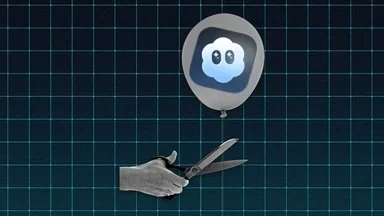
The writing is on the wall: OpenAI’s experimental generative AI social platform Sora is officially dead. OpenAI’s executive leadership has directed the company’s skilled engineering and product teams to wind down work on the platform — which was only publicly available for a handful of months — and redirect the bulk of their effort to OpenAI’s core business lines: enterprise AI services and AI coding development tools.
Put another way, OpenAI is refocusing on its top strategic goal: outcompeting Anthropic, its closest big rival in the generative AI space. What the company’s head of applications reportedly called a “side quest” — challenging TikTok’s dominance in short-form social media — is being scrapped entirely. Even Disney, which had planned to license its iconic characters and intellectual property for use on Sora, has pulled back its planned investment in the AI giant.
The reality is, Sora was never likely to find long-term success as a mainstream social media service. Successful social platforms are rooted in connection to the real world. While no one truly believes TikTok or Facebook are a replacement for offline life, these apps hook users by offering at least the illusion of real, tangible connection. Users source breaking news on X, catch up with actual friends and family on Instagram, and follow creators who frame their content as relatable and aspirational, implying that any viewer can replicate the looks, recipes, and dance moves they see on screen. It is true that algorithmic bias, widespread misinformation, and the growing flood of generative AI content have all polluted these existing online ecosystems. But their core foundation remains connecting users to the real world, even as they often warp how we perceive that world.
Sora was the exact opposite. The creative universe built by Sora’s users centered on endless, entirely artificial world-building: an infinite scroll of hyper-rendered, wholly made-up “disrealities.” The content hosted on Sora was undeniably impressive, but it filled the same creative niche as playing The Sims or taking an art class — not the role of a breakout hit social platform. Third-party estimates from earlier this year back this up: Sora only attracted a little over 1 million weekly active users. For context, TechCrunch notes that roughly 900 million people use ChatGPT every week.
That does not mean Sora had no value. The platform gave everyday users an unprecedented pathway to creating their own fantastical, original content, unlocking artistic freedom that just a few years ago would only have been accessible to professional animators working at major Hollywood studios. Want to watch a talk show where Kermit the Frog breaks down what “content moderation” actually means? Or a live-style recording of Moses parting the Red Sea? Or a ballet performance by an astronaut on the moon? All of these clips and countless more were available on Sora, at least before OpenAI pulls the platform offline permanently.
For users who genuinely enjoyed Sora or used it as a creative outlet, OpenAI has confirmed it will release more details soon about how creators can save their work before the permanent shutdown. “What you made with Sora mattered, and we know this news is disappointing,” the company shared in a post on X on Tuesday.
At the end of the day, Sora satisfied users’ creative itch, but not the endless consumptive draw that keeps users scrolling on mainstream social platforms. Sora also had no shortage of glaring, problematic flaws. It infamously allowed users to generate deepfake content that brought deceased public figures back to digital life, including Martin Luther King Jr., a feature OpenAI only walked back and issued a vague apology for after widespread backlash.
The platform’s approach to political content was also confusing and inconsistent. As Fast Company reported, users could not claim usernames associated with political figures, but they could easily generate hyper-realistic images of public figures that looked identical to Donald Trump. The platform also hosted AI-generated content showing children using cocaine, distributing marijuana, and being the target of violence, content that multiple child safety experts told Fast Company was deeply inappropriate and harmful.
OpenAI Shuts Down Sora: Why the Short-Lived Generative AI Social Platform Never Found Its Footing